
October 12, 2020
Kootenai Falls is now my favorite geological place in all of Montana! In addition to having some of the most beautiful features, it is also a sacred place for the Kootenai tribe. Scout and I spent about 3 hours exploring the rocky beaches, folds, and steep paths (if you can call them that).
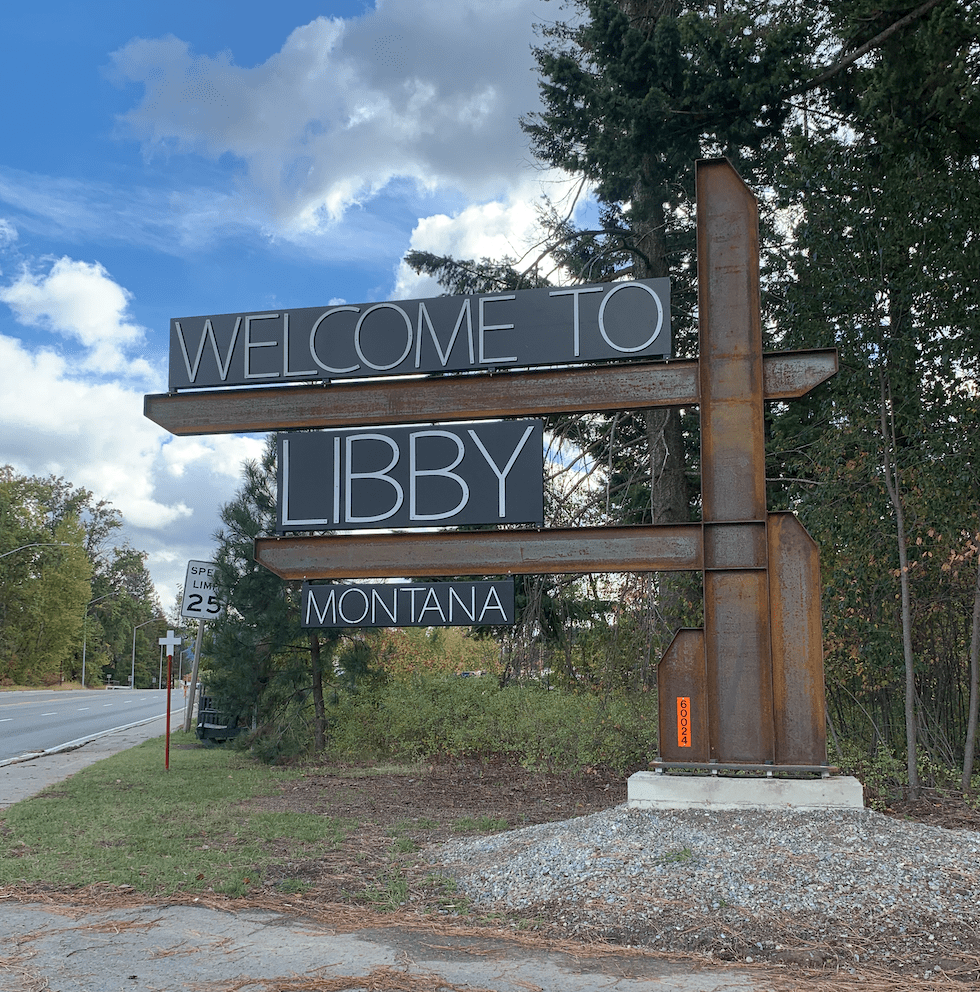
From our home in Bigfork, it took us 2 hours to reach the falls. We headed west on Highway 2, out of the Flathead Valley and over mountains to the west. I highly recommend going through the backroads in the Kootenai National Forest with some of the most vibrant colors and pristine landscapes. About 7 miles before the falls is Libby, Montana, which is a quaint, mountain town, will nearly every building and business concentrated around the main street.
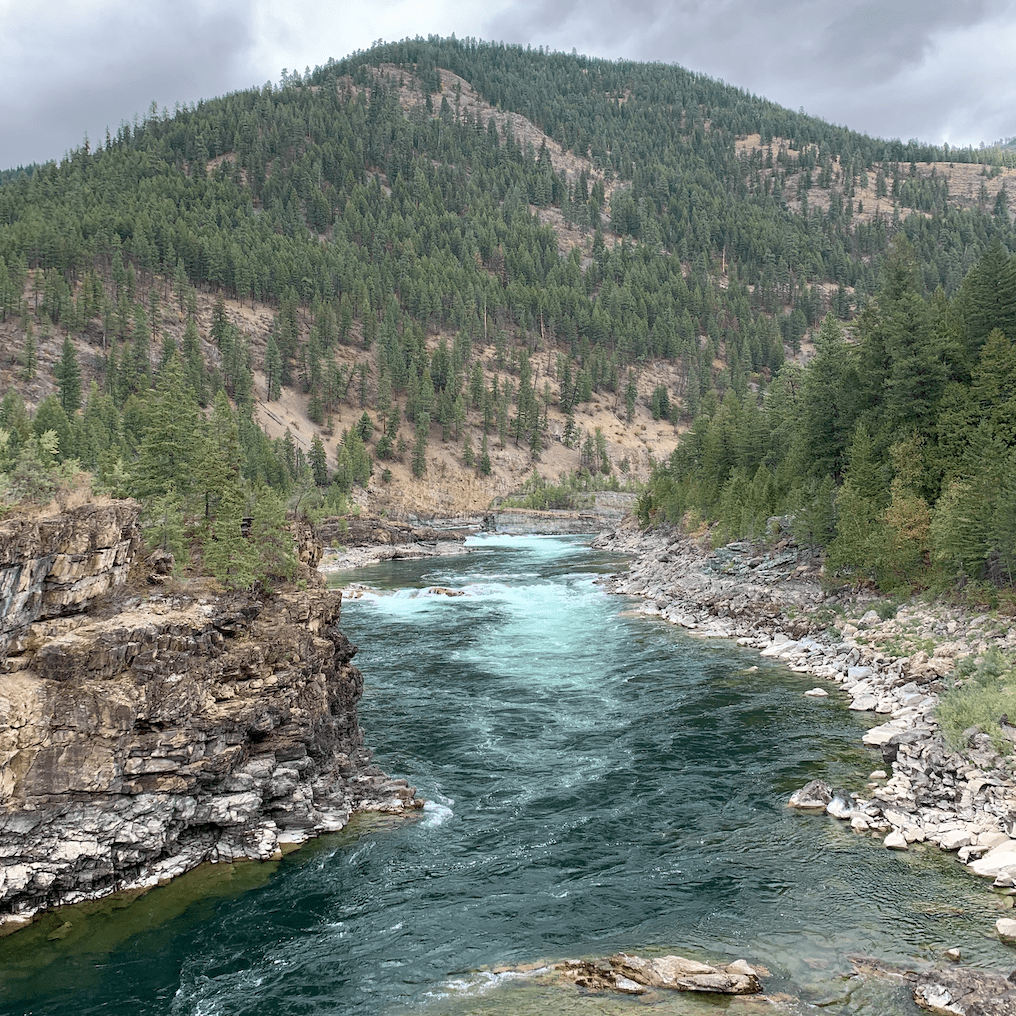
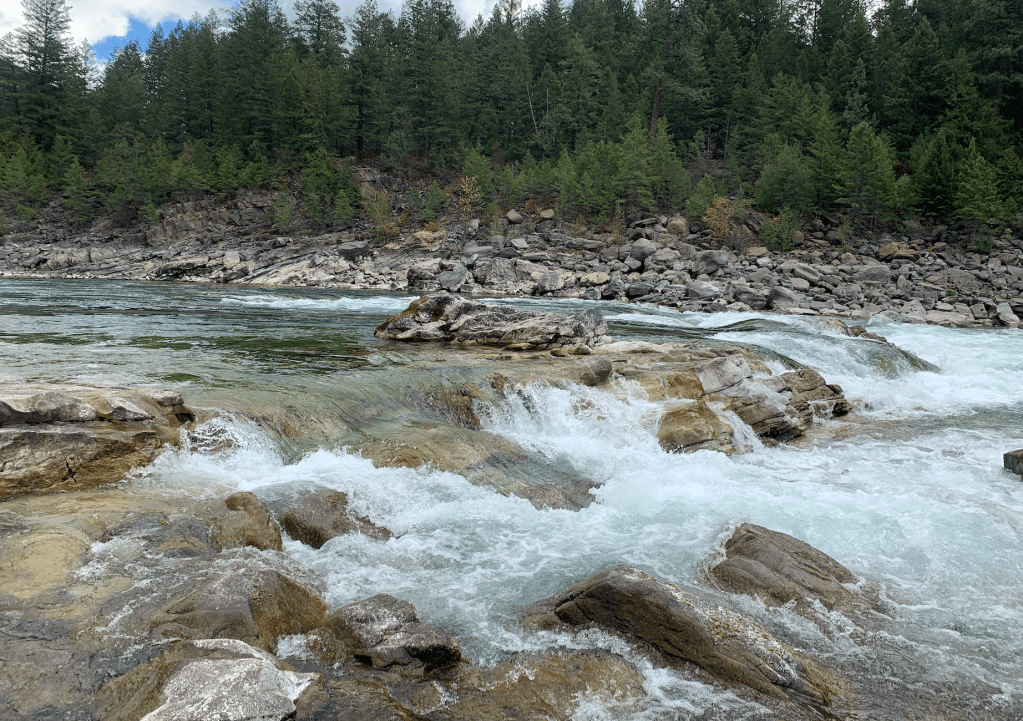
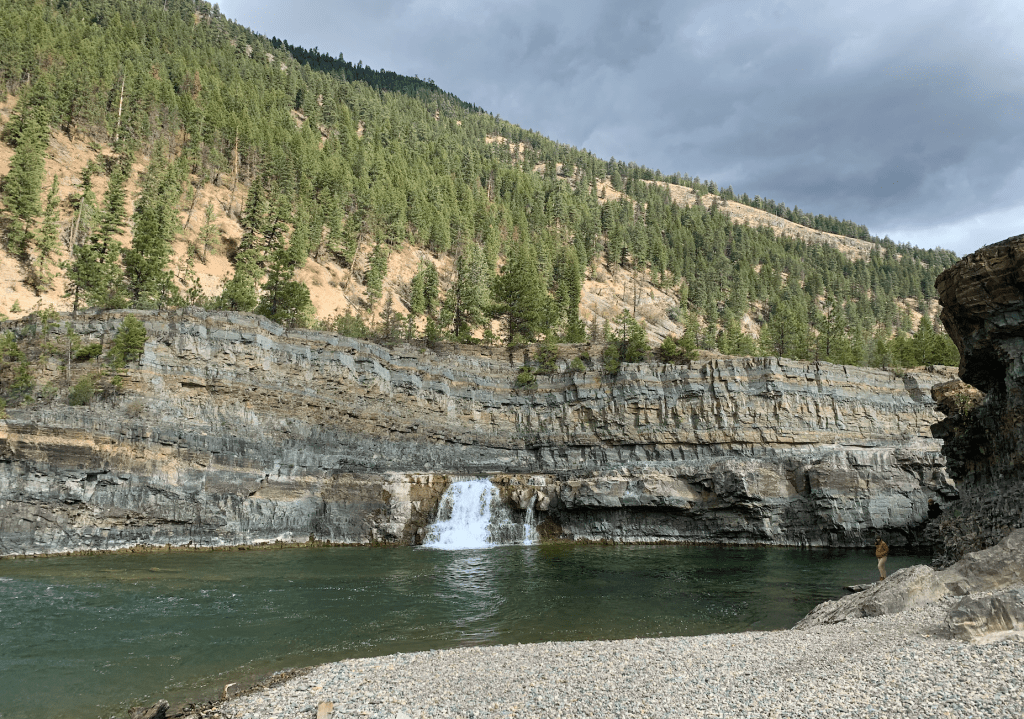
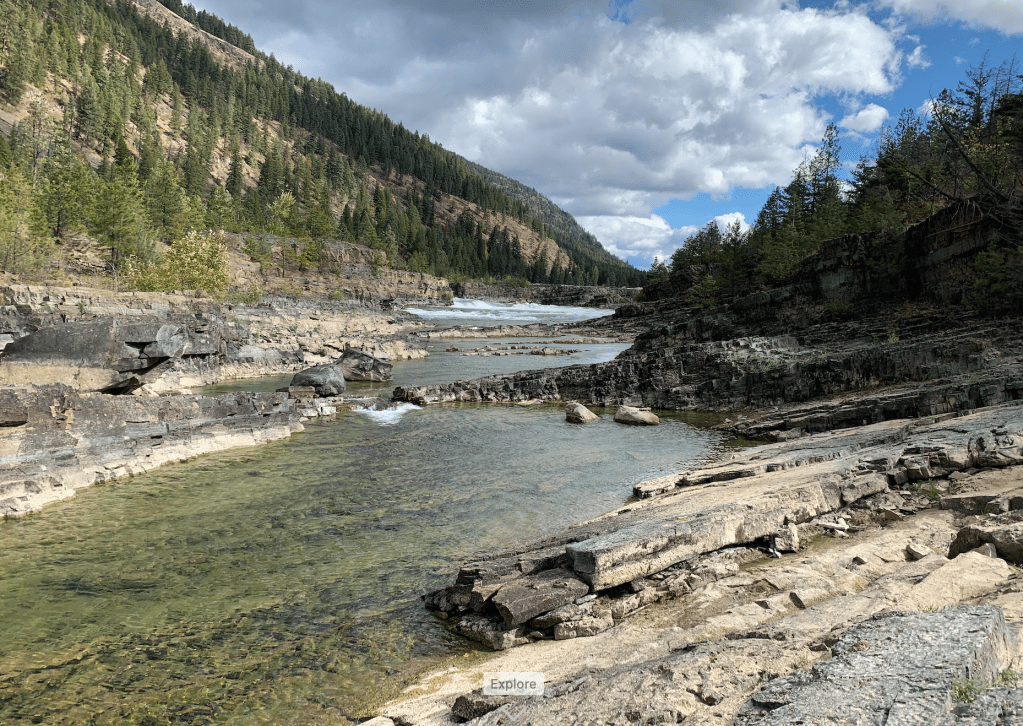
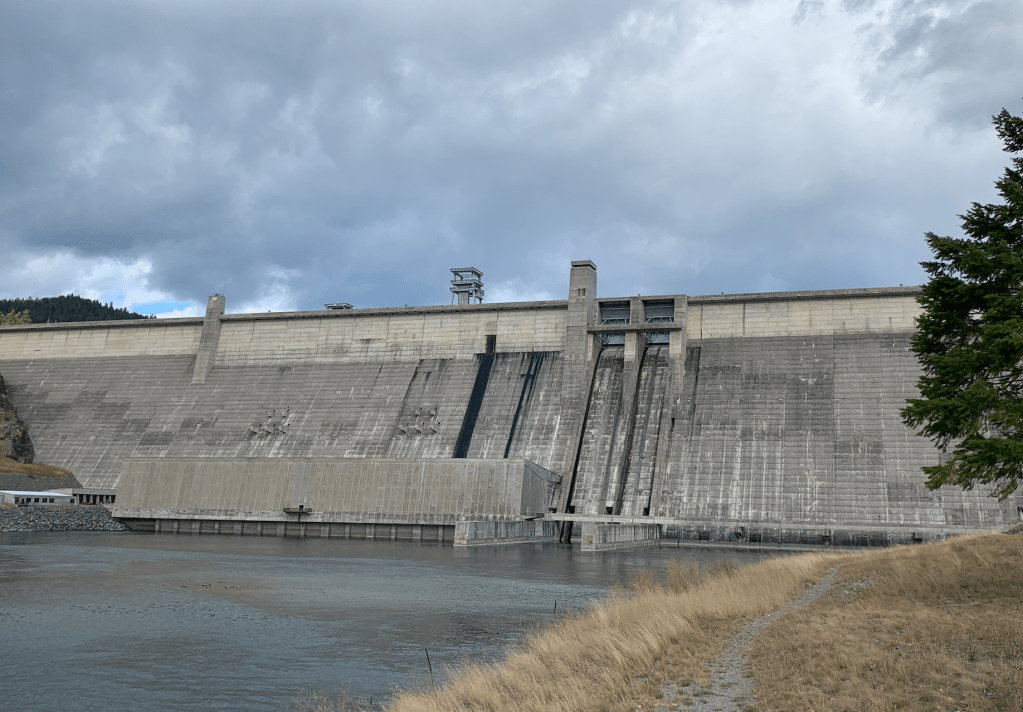
There is a small parking area right off the highway, surrounded by very tall mountain walls. After a short, paved path, all the trails become native ground, scrambling over rocks and roots, around trees and boulders. But the first glimpse of the falls about 50 feet down is incredible! In some areas, the cliffs have a sheer drop down to the fast-moving river. In other parts, it’s sloping vegetation down to a beach of deposited pebbles and larger boulders. The river’s flow, which is partially controlled by the Libby Dam about 30 miles upstream, was relatively slow that day, but there were still beautiful falls and rushing rapids to see from a safe distance. The spill zone is clearly defined with vast swaths of rocks covered in deposited debris.
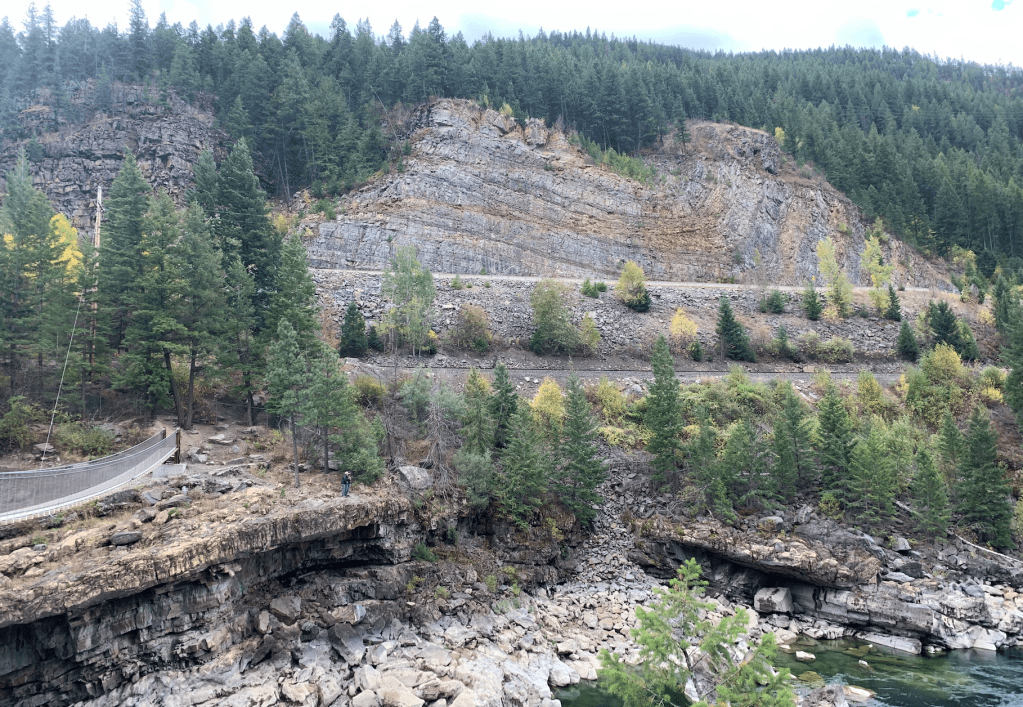
Besides the water features of this gorgeous canyon, there are so many examples of the various geologic processes that created the forms we see today. There are folds in the rock layers that show the east-west tectonic compression that forcibly bent them. The rocks that the falls run over have clearly defined layers which shows us that these sedimentary layers were deposited by when Montana was underwater, and the stromatolites are fossils of ancient algae-like organisms that existed in shallow seas. Not only that, but you can see the scrapes from glaciers as they most recently carved up the canyon and river valley.
Everywhere you turn, it feels like one of those places that is impossible to put into words and it spins magic all around you. I completely understand why the Kootenai tribe considered the falls the center of their world. They are the largest falls in the state that remain without a dam and the Kootenai protect this part of their culture and stewardship of the land. For generations, tribal members have come to these waters to commune with their spirits and for direction in their lives. This continues today. On the eve of Indigenous Peoples’ Day, I took this time to reflect on my presence on these lands and my continuing education about native peoples and cultures.
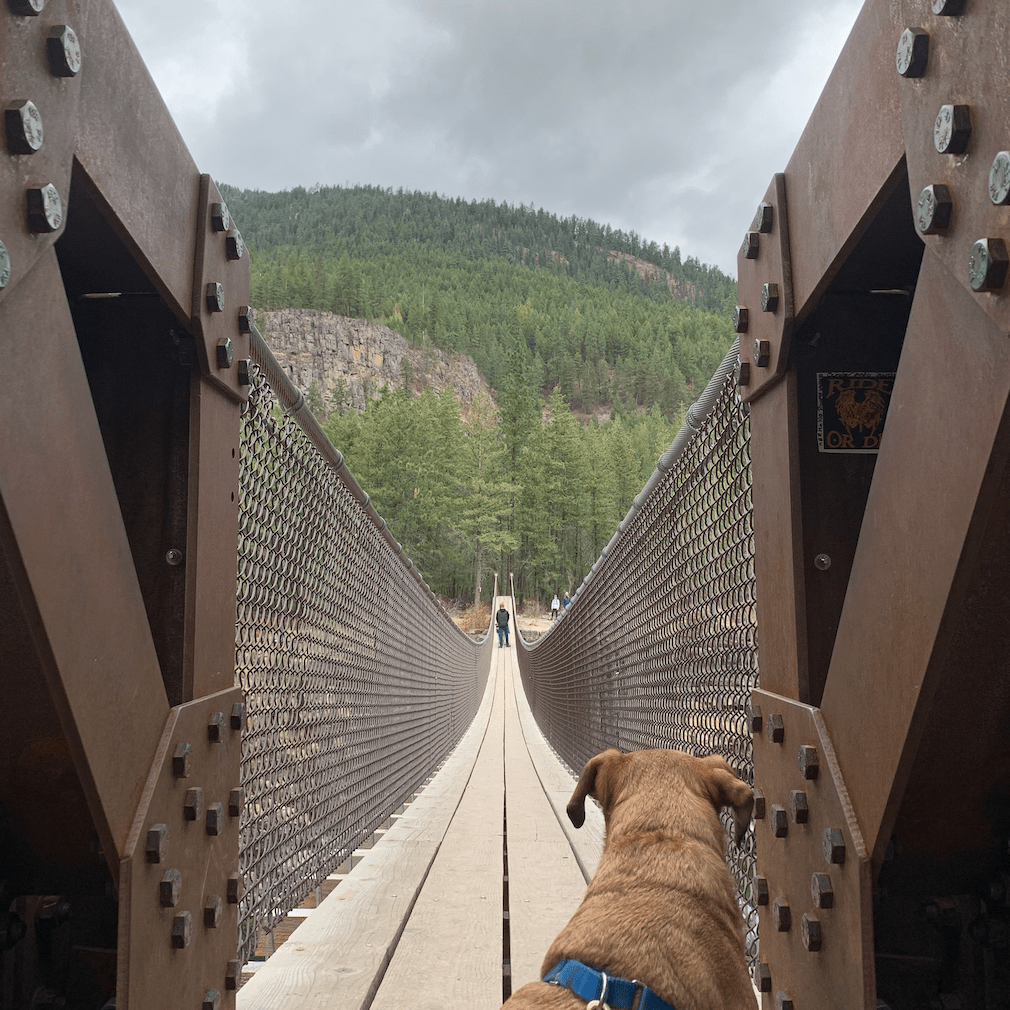
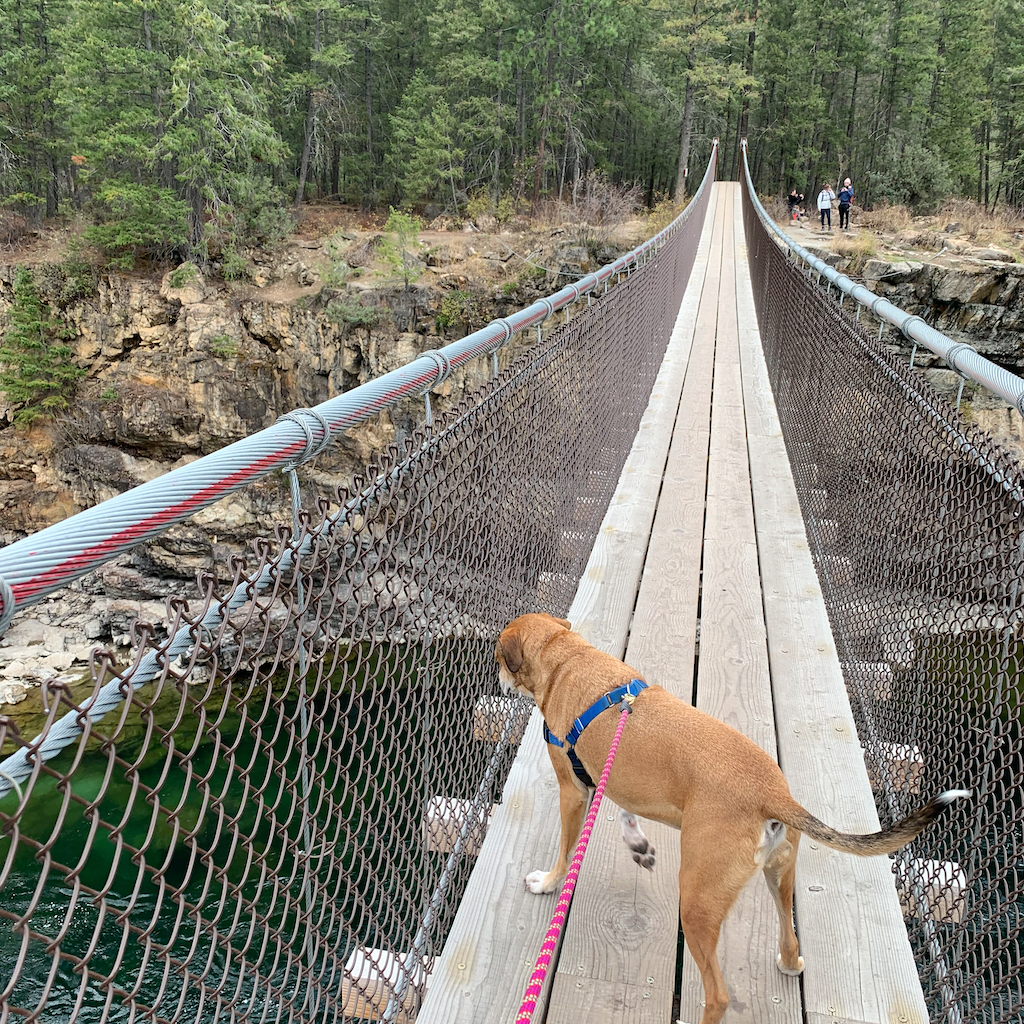
This site is sacred for the Kootenai and provides a rich experience for visitors, too. The Swinging Bridge was originally built to help firefighters reach the other side of the river, but it has become a draw itself. This suspension bridge wobbles like crazy in the wind, but it’s absolutely worth the two trips to see the falls from above. You have to take two trips because there is no other way back across if you make it over once!






 Sabbatical with Scout